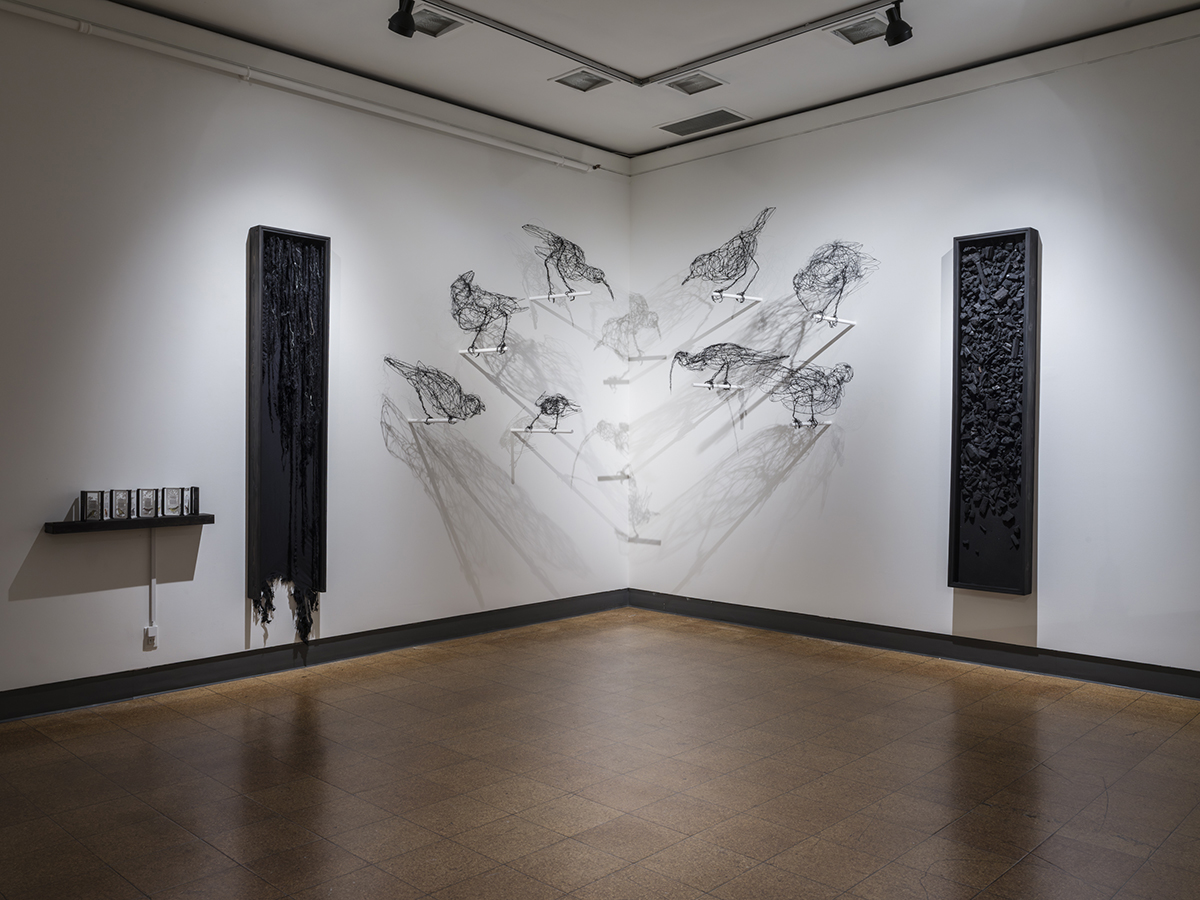
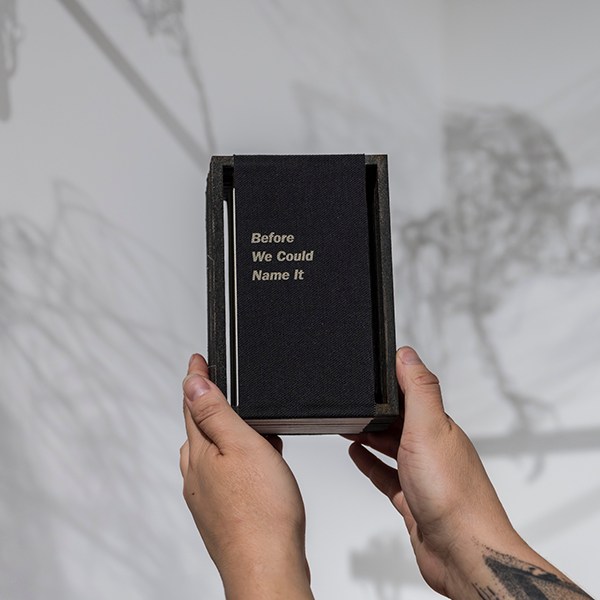
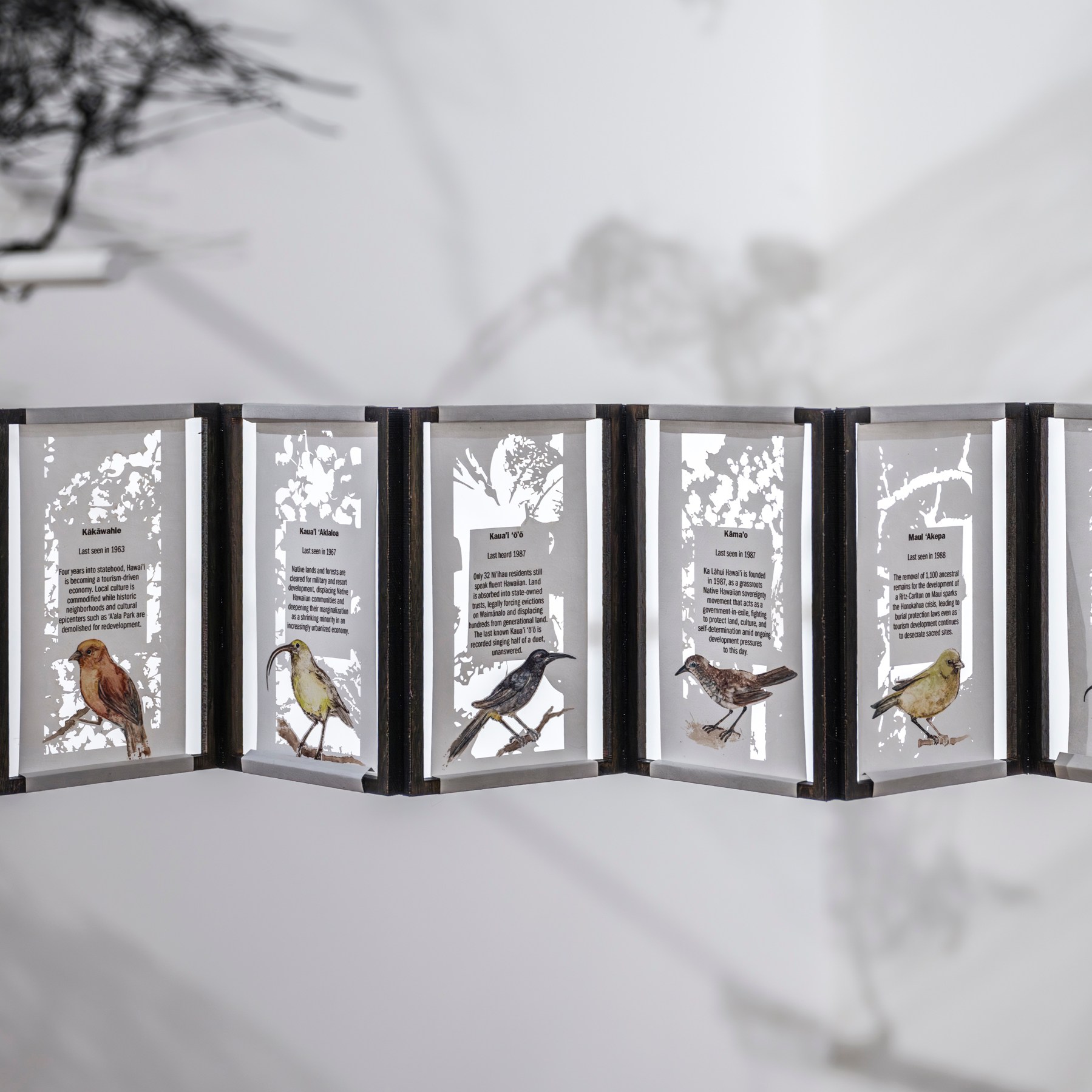
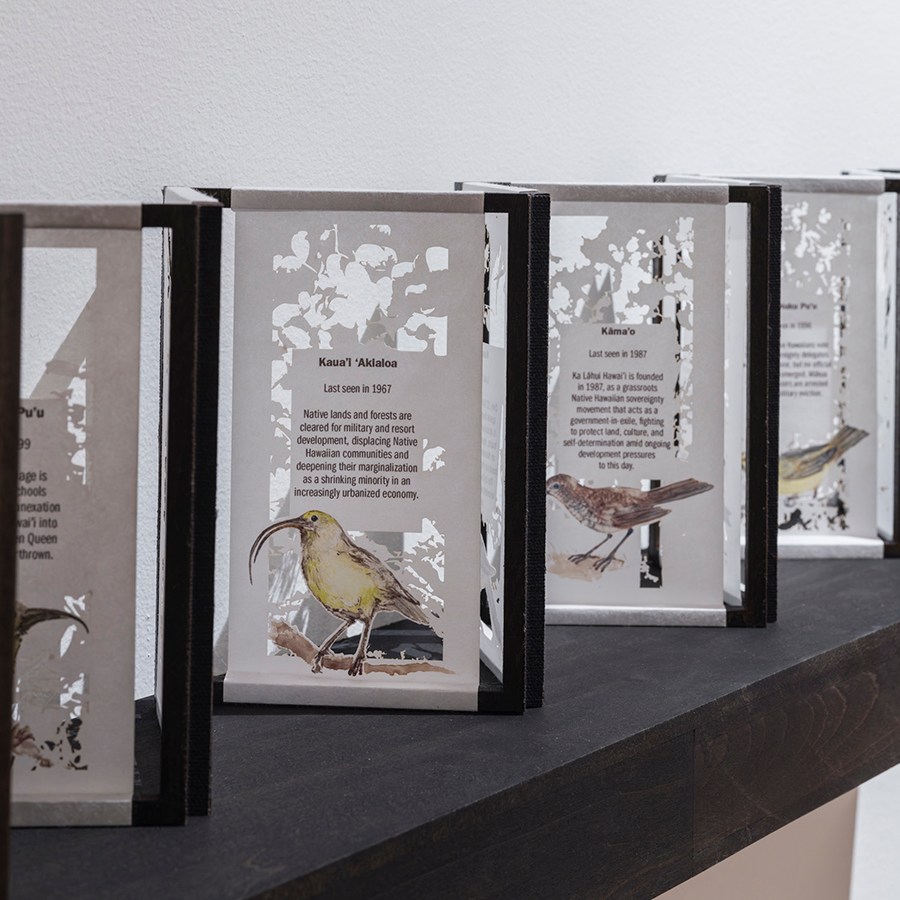
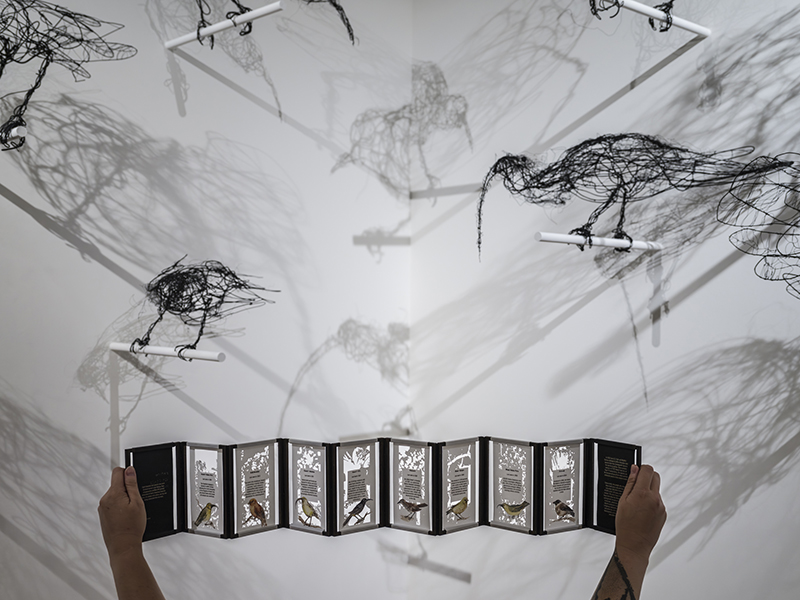
Before We Could Name It is a response to the rapid loss of bird species in Hawai‘i, a crisis that mirrors the displacement of Native Hawaiians and the erasure of land-based knowledge systems. This research is informed by my experience growing up with Hawai’i as an inherited idea rather than a lived place, and shaped by my family’s dislocation from the islands. This work presents the ecological crisis of Hawai’i as a direct reflection of the historical violence imposed on the lahui (the Hawaiian People), beginning with colonization of the islands and the illegal overthrow of the Hawaiian Kingdom. Today, Native Hawaiians primarily leave the islands because of economic conditions, characterized by low wages, the high cost of living, and limited job or career advancement. Migration is considered a means towards financial stability and survival. My grandfather’s choice to leave Oahu for my grandmother’s healthcare, leading to our permanent relocation on the continent, exemplifies the choice many Native Hawaiians face: stay and cope with an increasingly expensive cost of living, or leave in hope of a more sustainable life.
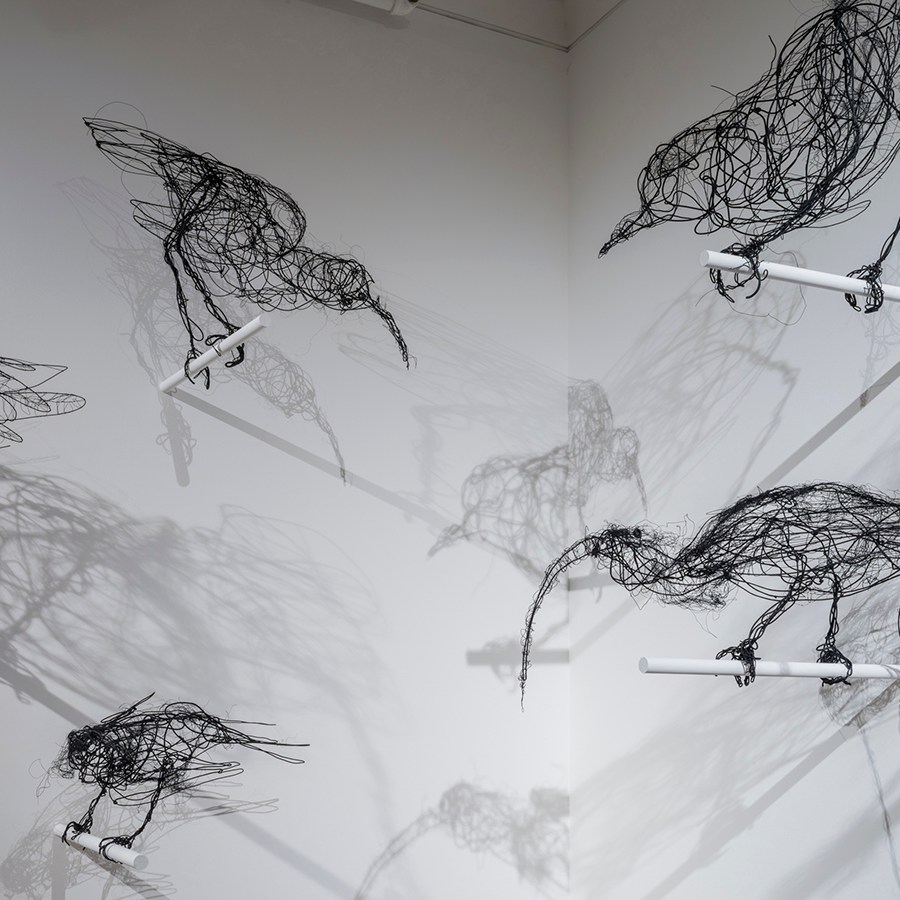
The rapid loss of Native Hawaiian bird species, rendered in wire, become an allegory for the displacement and marginalization of Hawaiians on their own ancestral lands. The decline of native species due to urban sprawl and environmental destruction mirrors the economic and social degradation that pushes Native Hawaiians, like my grandfather, away from the ‘āina (nourishing land). The work makes visible the precarity of both ecological and cultural survival. The birds’ skeletal frames give them form while acknowledging their absence; hollow memories that highlight the break in cultural knowledge transfer that defined my upbringing. Because my mother was disconnected from our roots yet instilled in me a fierce sense of Hawaiian pride, I grew up within a condition of cultural attenuation common to many indigenous people shaped by displacement and historical rupture; of having cultural pride in theory but lacking in depth of practice, resulting in knowledge gaps and identity uncertainty.
photos by Alexis Joy Hagestad